How to Dry Parsley in the Oven: A Simple Guide for Preserving Fresh Herbs
Parsley, with its vibrant green leaves and fresh, peppery aroma, is a cornerstone in countless culinary traditions, from zesty Mediterranean salads to hearty European stews. Many home cooks and garden enthusiasts often find themselves with an abundance of this versatile herb, particularly after a successful harvest or a trip to the local farmers’ market for a large, leafy bunch. While fresh parsley is undoubtedly a treat, its shelf life is fleeting, often wilting before every last sprig can be enjoyed. Instead of letting those precious leaves go to waste, there’s a remarkably simple and effective solution: drying them. And when it comes to preserving parsley, learning how to dry parsley in the oven stands out as a quick, reliable, and incredibly rewarding method. This guide will walk you through everything you need to know to transform your fresh bunches into a long-lasting pantry staple, ensuring you always have a burst of herbaceous flavor at your fingertips.Why Oven Drying is Your Best Bet for Parsley Preservation
While there are various methods for preserving herbs, such as air drying or using a dehydrator, drying parsley in the oven offers a unique blend of speed, efficiency, and superior flavor retention that makes it a top choice for home cooks. Unlike air drying, which can take several days and risks inconsistent results or even mold if humidity is high, the oven method provides a controlled environment that significantly accelerates the process. You can go from fresh herb to a perfectly crumbly dried product in under an hour, making it ideal for those spontaneous preserving sessions. Furthermore, oven drying, when done correctly at a low temperature, helps to preserve parsley’s essential oils, color, and aroma better than some other quick methods like microwaving, which can sometimes scorch the delicate leaves and diminish their potency. By using your oven, you're not just drying the herb; you're gently coaxing out its moisture while locking in its vibrant characteristics. This means your homemade dried parsley will not only taste fresher than many store-bought varieties but also retain its beautiful green hue, ready to elevate your soups, sauces, marinades, and roasts with a reliable burst of garden-fresh flavor. It’s an ingenious way to Stop Waste: Oven Dry Parsley to Preserve Freshness for Months, ensuring not a single leaf goes unappreciated.Gather Your Simple Supplies: What You Need
One of the greatest advantages of learning how to dry parsley in the oven is the minimal equipment required. You won’t need to invest in any fancy gadgets or a dedicated food dehydrator. Chances are, you already have everything necessary in your kitchen.Essential Ingredients:
- Fresh Parsley: This is, of course, the star of the show! Both flat-leaf (Italian) parsley and curly parsley varieties work exceptionally well. Flat-leaf parsley is often preferred for its stronger flavor, but the curly kind dries just as effectively. When selecting your parsley, look for bright green, vibrant bunches free from any yellowing, browning, or soft spots. The fresher, the better for optimal flavor retention.
- Cold Water: For washing your herbs.
Basic Equipment:
- Oven: The heart of this drying method. Any standard home oven will suffice, though one with a fan-assisted (convection) setting can be particularly efficient for even drying.
- Baking Tray or Cookie Sheet: You’ll need a flat surface to spread your parsley. Standard metal baking sheets are perfect.
- Parchment Paper: While not strictly mandatory if your baking sheet is perfectly clean and non-stick, parchment paper is highly recommended. It prevents the delicate herbs from sticking, makes cleanup a breeze, and, perhaps most conveniently, allows you to easily slide the dried parsley into your storage container. Plus, it can often be reused!
- Clean Kitchen Towel or Paper Towels: Essential for thoroughly drying your washed parsley. A salad spinner can also be a fantastic tool for this.
- Airtight Containers: For storing your finished dried parsley. Glass jars with tight-fitting lids (like Mason jars) are ideal.
Step-by-Step Guide: How to Dry Parsley in the Oven
Drying parsley in the oven is an incredibly straightforward process, designed for efficiency and ease. Follow these simple steps for perfectly preserved herbs every time.Step 1: Clean and Prepare Your Parsley
The first crucial step is to ensure your parsley is impeccably clean and dry. Rinse your fresh parsley thoroughly under cold running water, gently shaking off excess water. Inspect each sprig and remove any leaves or stems that appear yellow, brown, or mushy – you only want to dry the brightest, healthiest green parts for the best results. Once rinsed, it's paramount to remove as much moisture as possible. Lay the parsley on a clean kitchen towel or pat it gently with paper towels. For even better results, a salad spinner can quickly remove a significant amount of water. This drying step is critical because any residual moisture can lead to steaming rather than crisp drying, potentially affecting the quality and shelf life of your dried herb.
Step 2: Arrange on a Baking Sheet
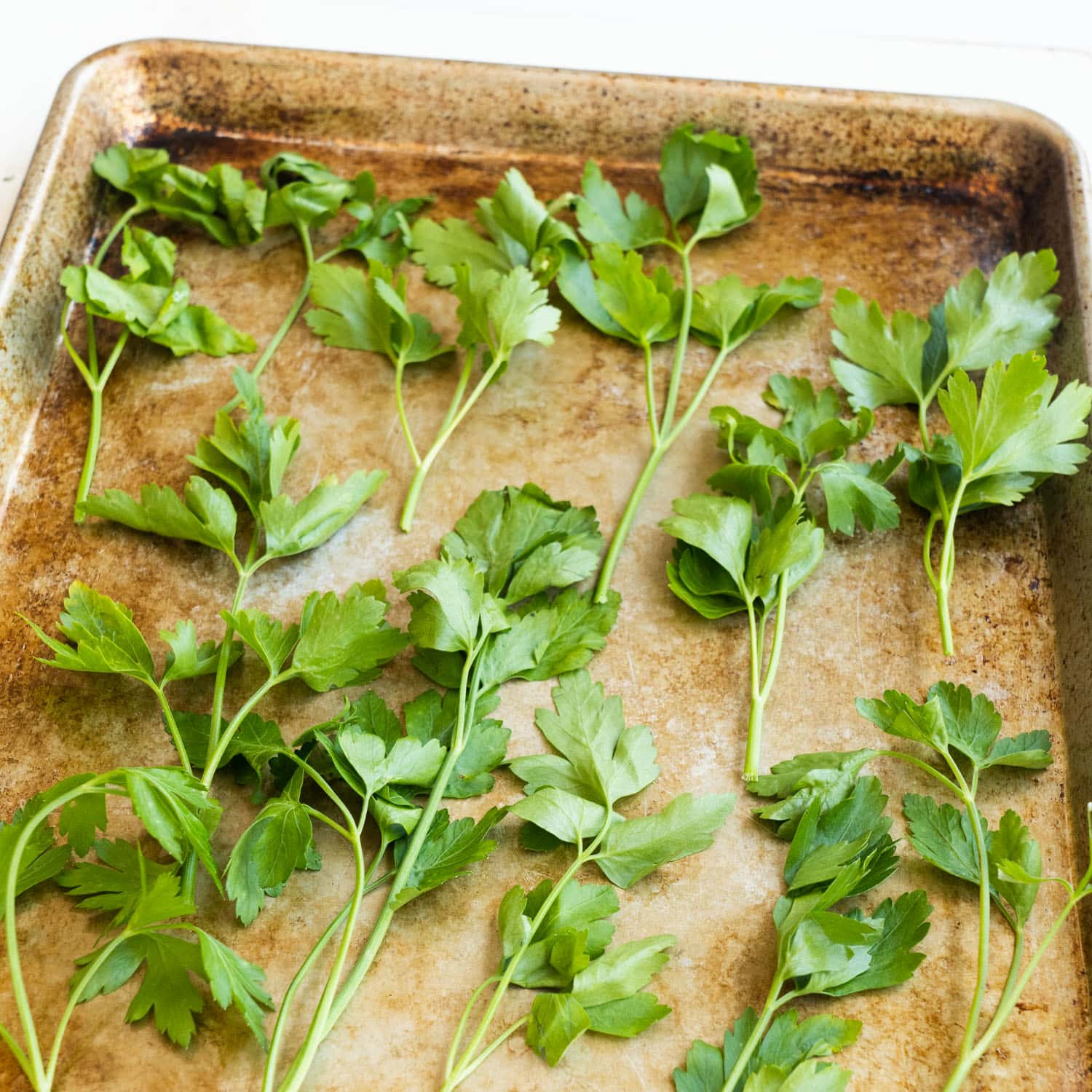
Line your baking tray or cookie sheet with parchment paper. This simple step will make handling the delicate dried parsley much easier and prevent it from sticking to the tray. Spread the cleaned and thoroughly dried parsley sprigs in a single layer across the parchment paper. Avoid overcrowding the tray; if you have a large batch, it's better to dry them in multiple batches. A single layer ensures even airflow and consistent drying. You can leave the stems attached at this stage; they can be easily removed after the parsley has dried and become brittle.
Step 3: Oven Drying Process
Preheat your oven to its lowest possible temperature setting. This is typically around 170°F (75°C) for fan-assisted (convection) ovens. If your oven doesn't have a fan setting, or if 170°F is not an option, you can use a slightly higher temperature, such as 200°F (95°C). The key is to use very low heat to dehydrate the parsley slowly, rather than cooking or toasting it. A fan setting is beneficial as it circulates the warm air more evenly, promoting faster and more consistent drying. Place the baking sheet with the parsley into the preheated oven.
Begin checking your parsley after about 15-20 minutes. The exact drying time will vary depending on your oven, the parsley's moisture content, and how thinly it's spread. Continue to bake, checking every 5-10 minutes, until the parsley leaves are completely dry and crumble easily when touched. They should feel brittle, almost like crispy autumn leaves. Be vigilant during the last few minutes to prevent burning. If you're looking for ways to save energy, you can also use the residual heat of a cooling oven after you've finished baking something else – simply place the parsley in the oven once it's turned off but still warm, and check periodically until dry. This method perfectly demonstrates that No Dehydrator Needed: Quickly Dry Parsley in Your Oven.
Step 4: Cool and Crumble
Once your parsley is fully dry and brittle, remove the baking sheet from the oven and allow the parsley to cool completely on the tray. This cooling step is important, as it helps the parsley achieve its final crisp texture. Once cool, carefully transfer the dried parsley to a small bowl. Use your fingertips to gently crumble the leaves into small flakes. At this point, any larger stems will be brittle and easy to separate; simply pick them out. For a very fine powder-like texture, similar to store-bought dried herbs, you can rub the crumbled parsley through a fine-mesh strainer or even pulse it briefly in a spice grinder or a clean coffee grinder.
